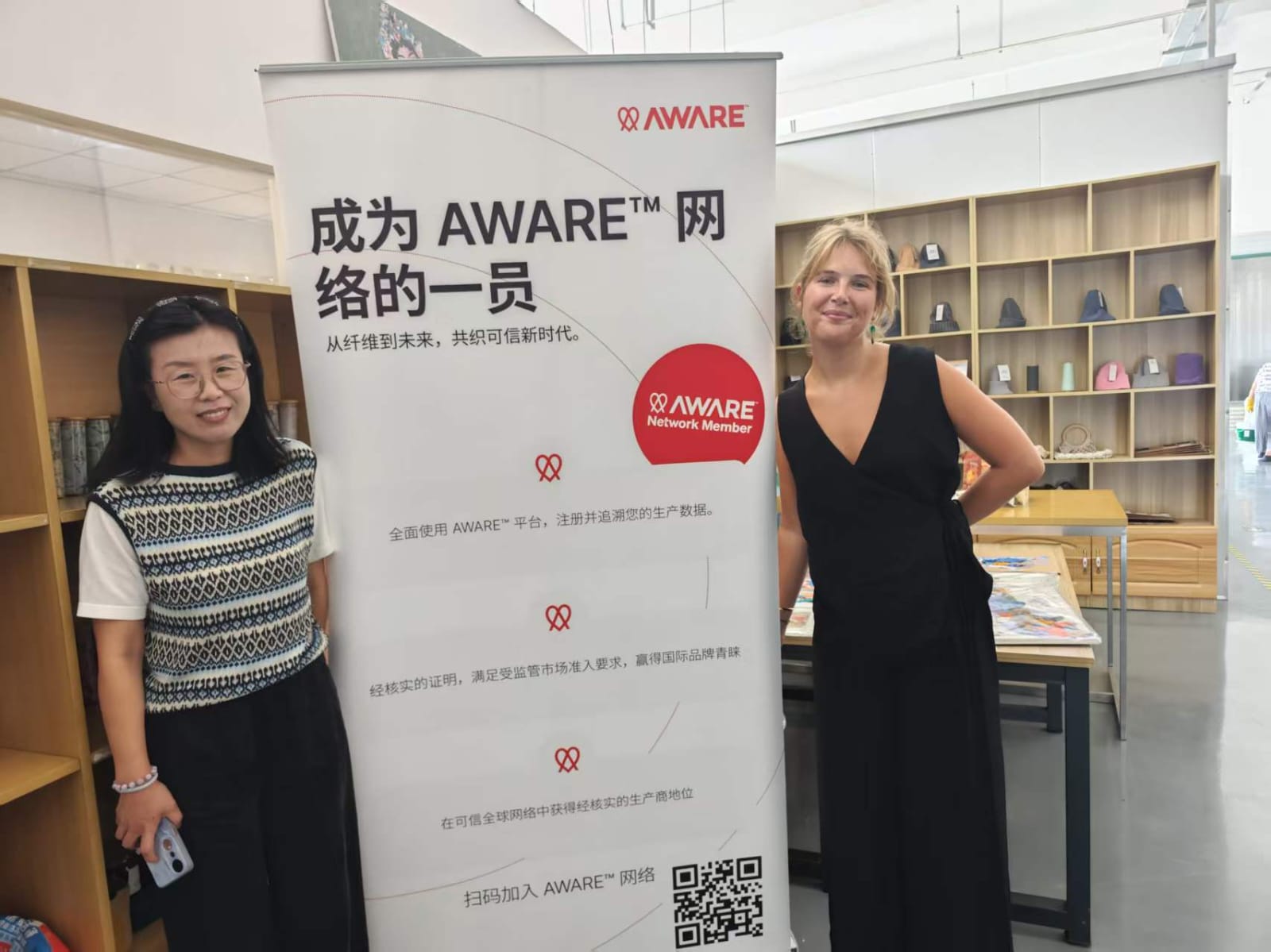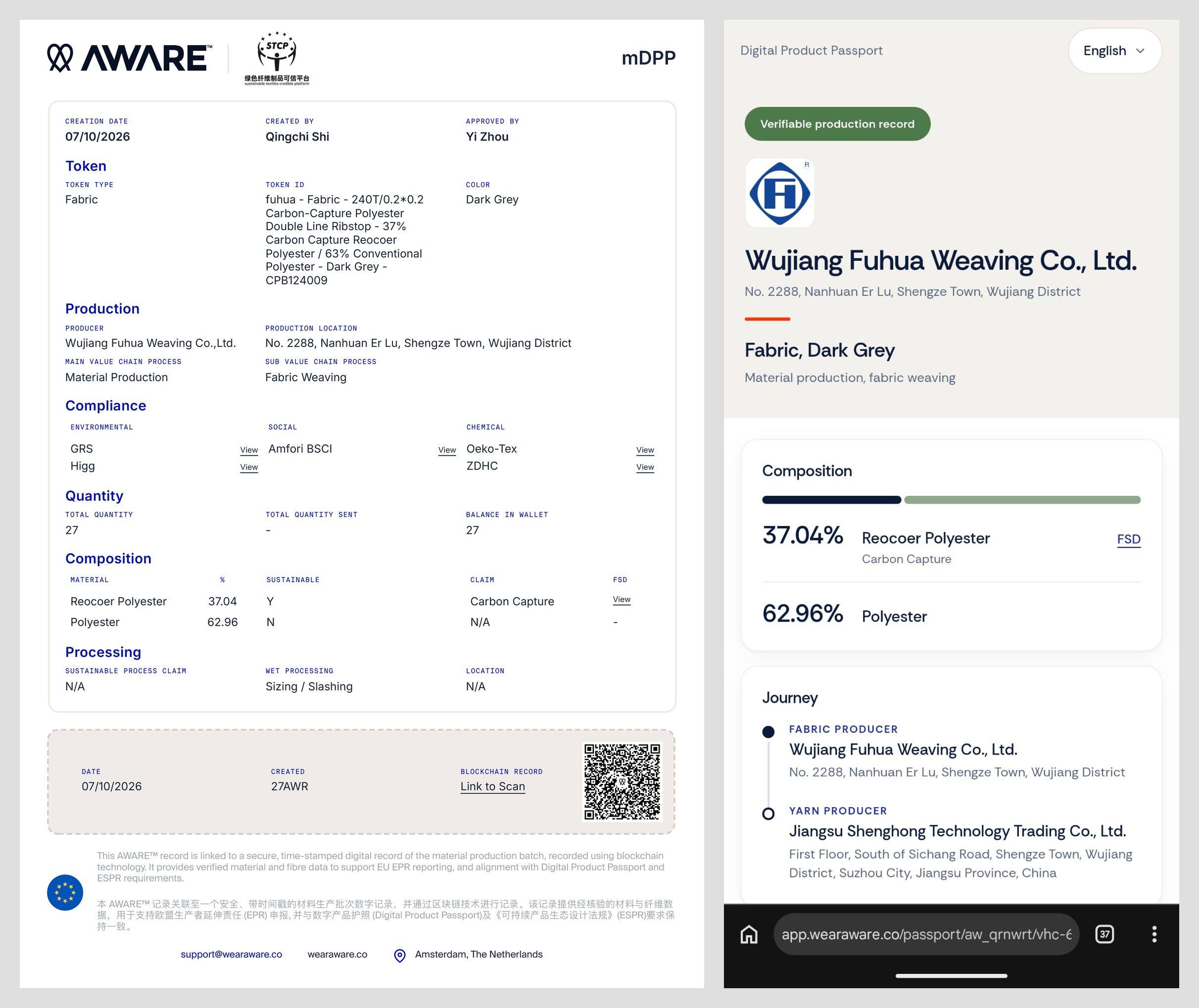
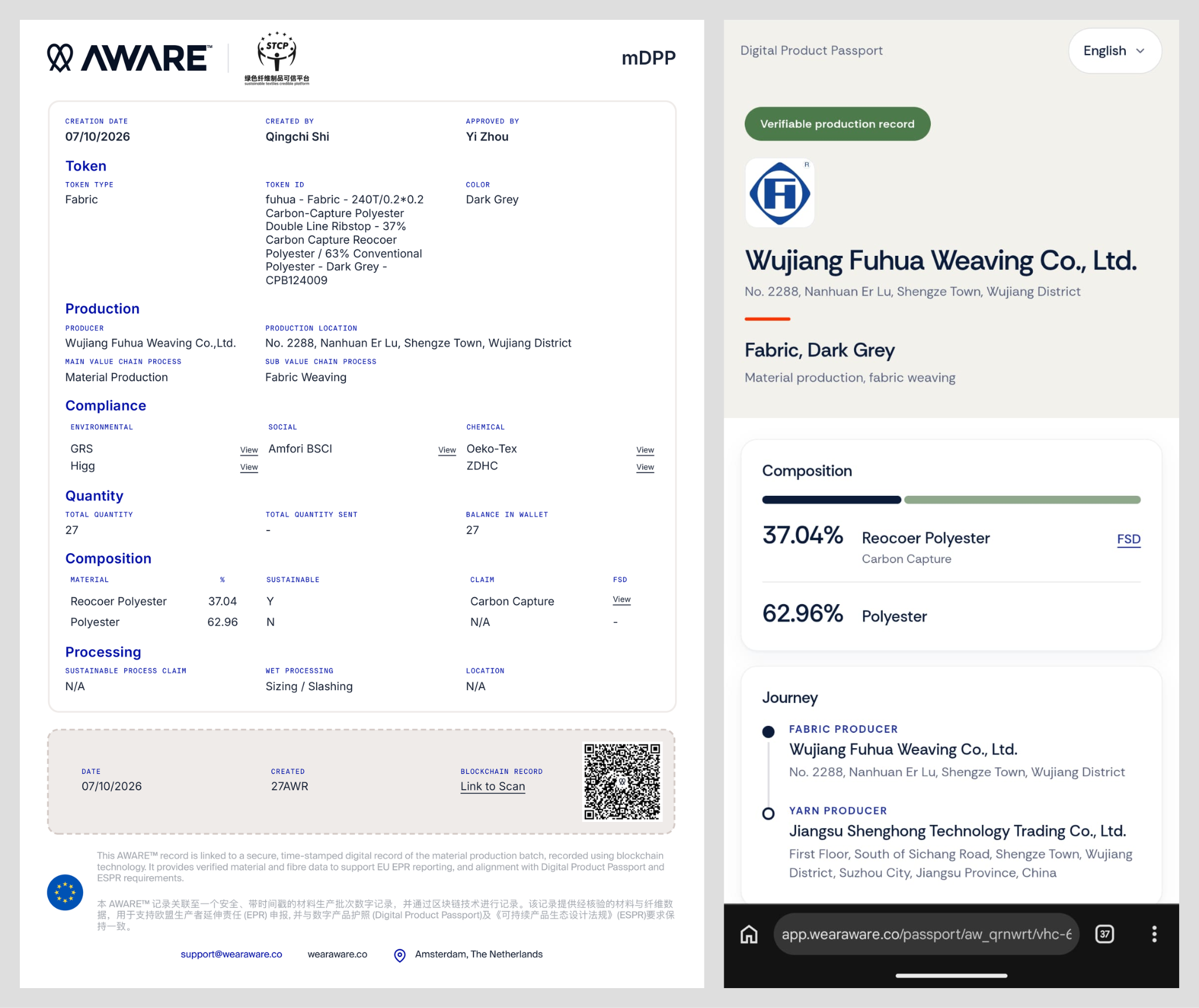
Every production batch you secure on AWARE™ now has a material digital product passport, an mDPP. It records who made the material, what it is made of, where it was made and what proves it. It opens on any phone through a QR code, and gives producers permanent and shareable ownership of their data.
First shown in Shengze, China
On 10 October, at the opening of the 15th Jiangsu (Shengze) Textile Expo, a roll of grey ribstop fabric carried a small QR code. Visitors who scanned it saw the batch's full record:
- Wujiang Fuhua Weaving made it in Shengze.
- 37% of it is Reocoer, a carbon-capture polyester yarn developed by Shenghong.
- GRS, Higg, Amfori BSCI, Oeko-Tex and ZDHC certify the production behind it.
- A blockchain record that shows none of this has changed since the batch was made.
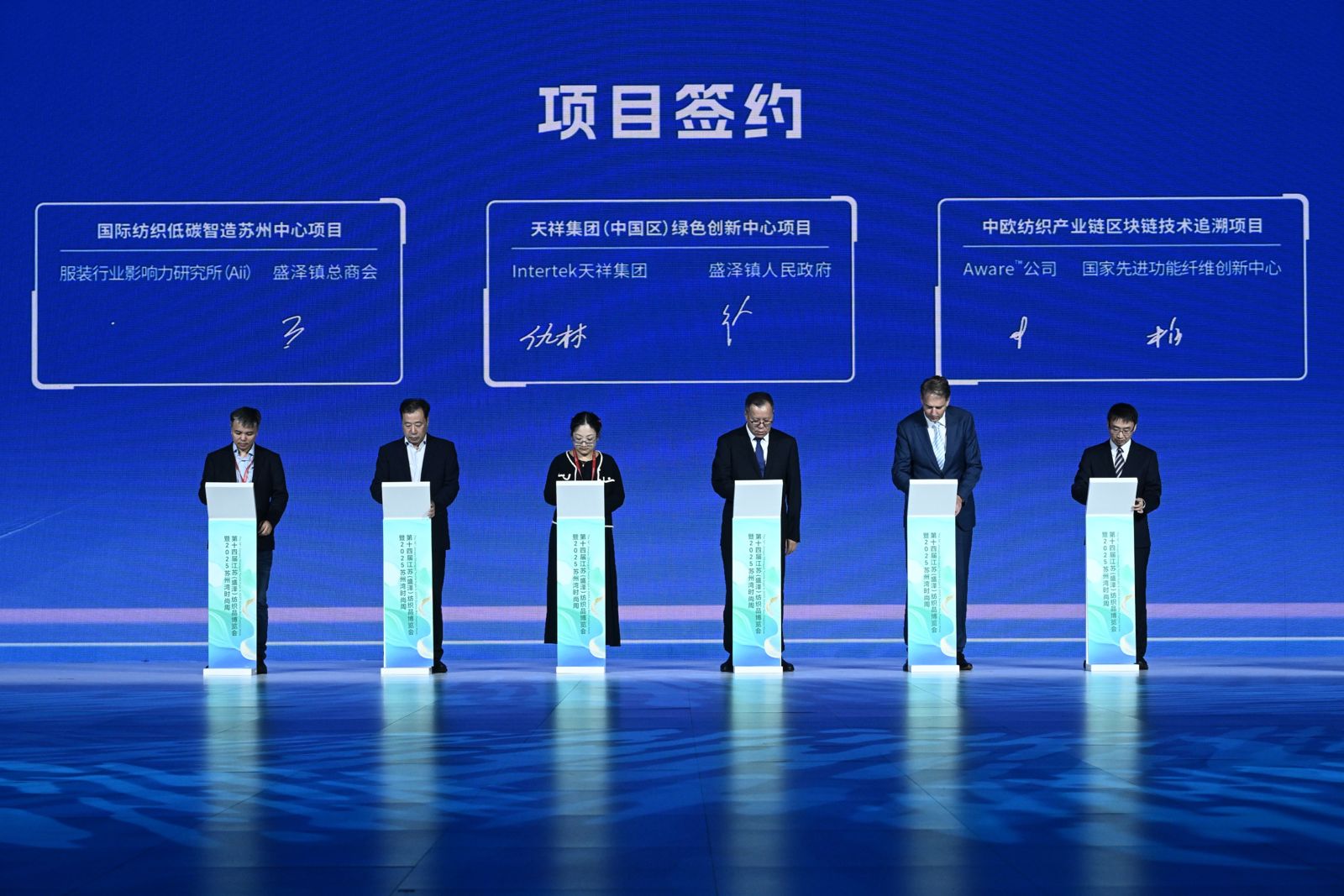
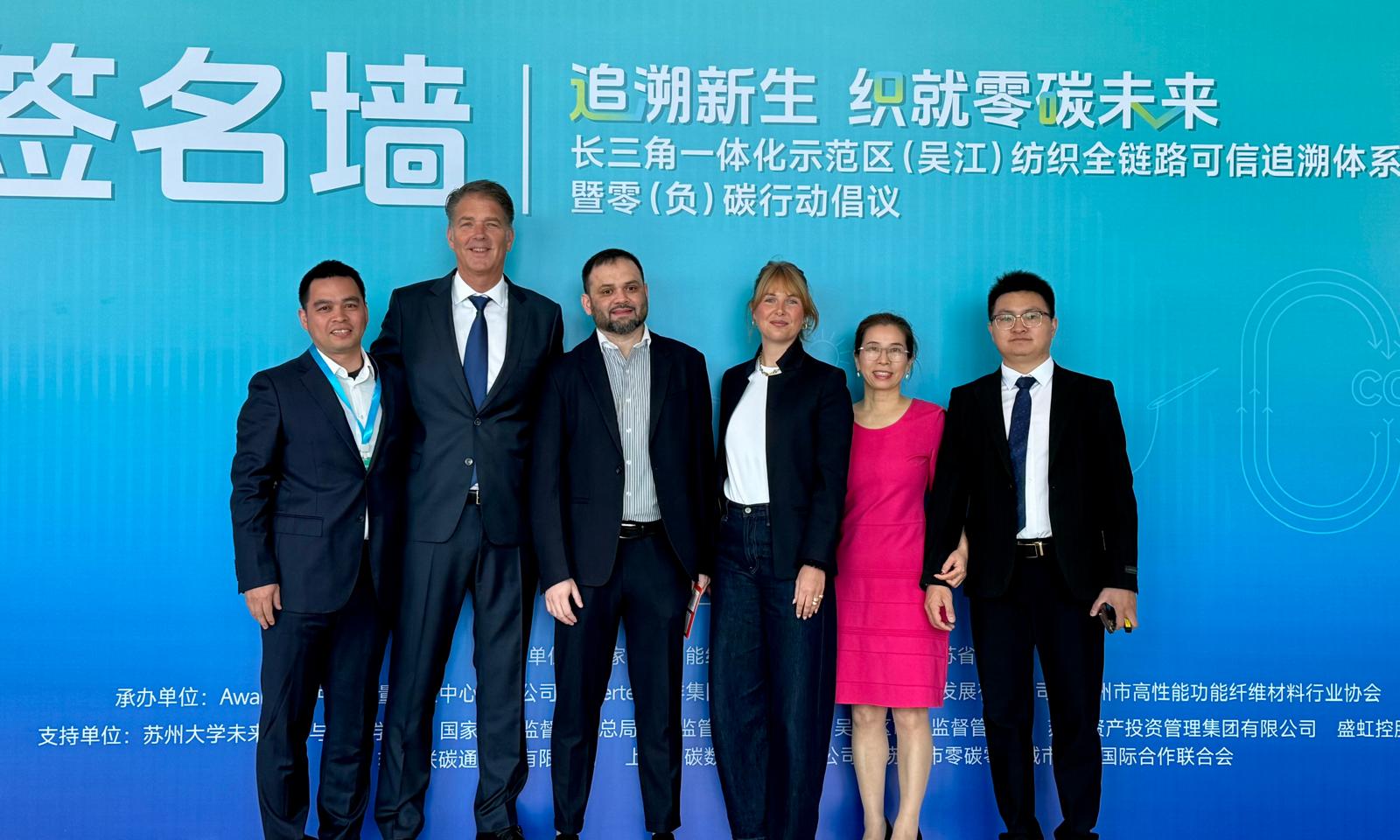
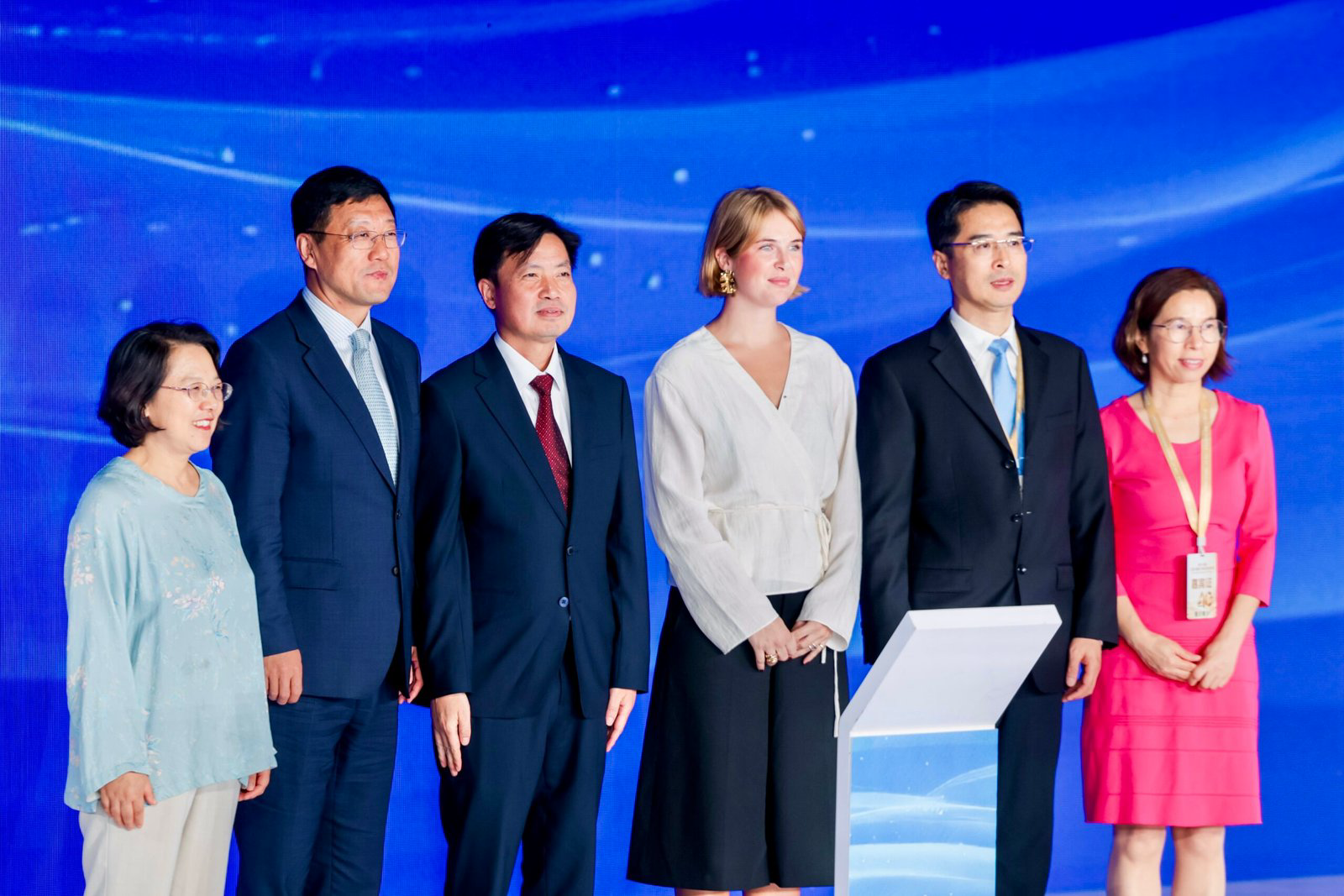
It was the first carbon-capture fabric mDPP in Wujiang District. The same day, AWARE™ signed a cooperation agreement with the Shengze Town People's Government to link Shengze's producers with international buyers, as covered by Textile Times.
That record is an mDPP, a material digital product passport. Today it's available to every producer on AWARE™.
What an mDPP is
A digital product passport tells the story of a finished product. An mDPP does the same for the materials that go into it: one batch of fibre, yarn or fabric, recorded by the producer who made it.
Producers don't have to fill in anything new, when they create a batch of tokens on AWARE™, the mDPP is built from the data they've already entered. Each token represents one kilogram of verified material, and the mDPP travels with the tokens to every customer downstream.
From fibre to finished jacket
The Fuhua fabric shows how this works across borders:
- STCP recorded the first mile traceability in China.
- Shenghong made the yarn, and Fuhua wove it into fabric. Fuhua's mDPP records the batch and links back to the yarn.
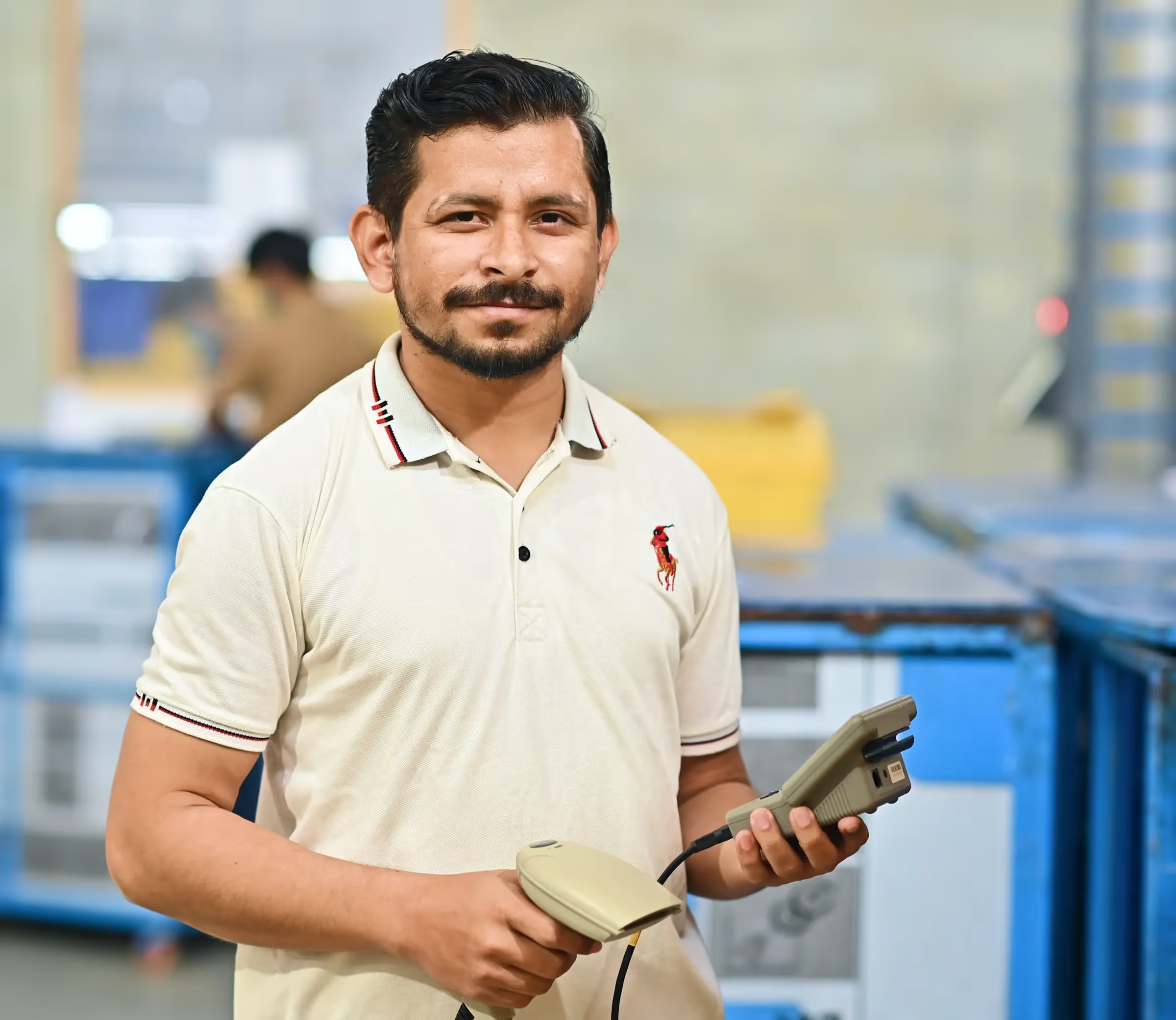
- In Bangladesh, Turag made the fabric into a jacket, and the jacket has its own AWARE™ DPP for the European market.
The jacket's passport is built on the material records behind it. Each producer adds what they know, and each keeps ownership of their data.
What's on it
- The producer, with the name and location of the facility that made the batch
- Composition, with each material's share, its sustainability claim and the supporting declaration
- The journey, showing the suppliers who made the inputs, such as the yarn behind a fabric
- Certificates, grouped as environmental, social and chemical, each linked to the document itself
- Processing and quantities, covering how the batch was made and how much of it remains
- Impact, where the producer has uploaded an assessment
- The blockchain record, a timestamped entry that anyone can check independently
The mDPP comes as a PDF report and as a web page. The QR code on the report opens the web page, which works on any phone, in English or Chinese.
Why it matters for producers
Brands ask their suppliers for proof: of composition, of certifications, of where the material came from. Under the EU's Ecodesign for Sustainable Products Regulation, that proof becomes the foundation of the product passports brands will need to sell in Europe.
The mDPP lets a producer answer those requests easily. The data sits in one verified record, linked to the source documents, and it goes to the customer along with the material.
"This agreement shows that international traceability and producer data ownership can go together," said Olivia de Seze, Asia Growth Manager at AWARE™.
How to find yours
Log in to AWARE™, open your token overview and select a batch. Your mDPP and its QR code are ready to view, download and share.
If you're a producer and want to start recording your batches, contact us at support@wearaware.co and more about the mDPP in our documentation.