
I have spent enough time in textile supply chains to know when a traceability story is too neat. The documents are there. The certificates are there. The supplier declarations are there. All with correct times, names and descriptions. Someone can usually assemble a clean explanation of where a product came from, who handled it, and which standards applied along the way.
But that is not the same as knowing what happened.
A brand wants suppliers to use a system. The supplier goes back through files, calls the previous supplier, collects PDFs, checks names and dates, and builds a story that fits the shipment. Sometimes the story is correct. Sometimes it is incomplete. Sometimes nobody in the chain can really tell anymore.
The problem is not that people are always trying to mislead. The problem is that the system still allows proof to be created after the event, instead of being captured when the event happened.
A trail is not a folder of documents
In textiles, material changes form several times before it becomes a product. Fibre becomes yarn. Yarn becomes fabric. Fabric is dyed, finished, cut, sewn, packed, shipped. At every step, something real happens to the material. A quantity is received. A batch is processed. A supplier hands it over. A factory ships it out.
Traceability should be the record of those events, in the order they occurred.
That sounds obvious, but it is not how many supply chains are still managed. What often exists is a document trail, not a data trail. The documents may point to the right places, but they are often produced in different systems, at different moments, by different parties, and only brought together when somebody asks for them.
A real trail starts at the source and continues forward. A reconstruction starts at the end and tries to work its way back. Those two things may look similar in a spreadsheet. Under scrutiny, they are completely different.

Borders are where the trail usually breaks
The weakness becomes most visible at borders.
Material can move from a ginner in India to a weaving mill in Bangladesh. Cotton, recycled polyester, or synthetic fibre can move from China into Vietnam or Pakistan. Commercially, this movement is normal. The textile industry has been built around cross-border specialisation for decades.
The physical shipment is documented. There is a packing list. There is a customs document. There is a delivery note. But the data that actually explains what the material is, where it came from, and who created the first record often does not move with the same discipline.
Instead, the receiving party starts a new record. They may refer back to the previous supplier. They may attach a certificate. They may enter a batch number into their own system. But the chain of custody has effectively restarted.
This is not because one factory is doing something wrong. It is because global textile supply chains were designed to move goods, not continuous verified data. Material crosses borders quite easily. Origin data often stays behind.
Why reconstruction is no longer enough
For many years, brands could live with this. Audits were periodic. Questions were answered with paperwork. If a supplier had the right certificate and could provide the right supporting documents, the shipment moved on.
That period is ending.
Regulation is changing the standard from documentation to evidence. Under the US Uyghur Forced Labor Prevention Act, importers need to demonstrate that goods are not linked to forced labor. Assurances from suppliers are not enough when a shipment is challenged. In Europe, the Digital Product Passport direction is also clear: product data must be accessible, connected to the product, and traceable back through the chain.
The exact regulatory language differs by market, but the direction is the same. Brands will have to show where material came from and how it moved. Not as a marketing claim. Not as a polished sustainability story. As evidence.
Evidence has a different quality than paperwork. Evidence needs continuity. It needs timing. It needs to be created by the party who handled the material when the material was handled. If the first real traceability work starts months later, after a shipment is already under review, the brand is already in a weak position.
What genuine cross-border traceability should do
Genuine cross-border traceability is not complicated to describe. It is just difficult to implement well.
The record has to start at the first meaningful point in the chain. That can be the farm, gin, recycler, fibre producer, or spinning mill, depending on the material and the supply chain. The important point is that the data is created at source, not described later.
When the material moves, the data record moves with it. The next party does not create a separate version of reality. They add their step to the existing chain. When the material crosses a border, the data crosses with it. When it changes form, the transformation is recorded. When it is split, combined, or processed, that is recorded too.
By the time the finished product reaches a brand, the brand should not be holding a collection of explanations. It should be holding a sequence. Who did what, where, when, and to which material.
That is the difference between a supply chain that can be defended and one that can only be explained.
One platform cannot replace every origin system
One platform will not replace every origin system. And it should not try to. Fibre brands, certification bodies, and local traceability providers have already invested in systems that capture origin data close to the source. Some of that data is good. Some of it is very specific to local practices, regulations, and certification schemes. The problem starts when that material leaves the country or moves into a supplier network that does not use the same system. The first-mile data may exist, but it often stops travelling.
A spinner in Bangladesh may be sourcing cotton from India and Pakistan, synthetic fibre from China, and recycled inputs from another region. Each origin may have its own certification body or traceability platform. Some of those systems contain valuable data. They should not be thrown away simply because a foreign spinner cannot work in all of these different portals.
But asking that spinner to maintain separate accounts, formats, and workflows for every origin is not realistic. This is where many first-mile traceability systems stop. They work locally, and then the material crosses a border and the data becomes difficult to use.
This is exactly the gap AWARE™ is built to solve. We do not ask every origin platform to disappear. We connect to verified first-mile data and bring it into one cross-border chain of custody, so the producer receiving the material can continue the trail instead of starting again.
Our first live integration is with Naffic's STCP platform in China. That makes Chinese synthetic fibre origin data available as a verified first step inside the AWARE™ chain of custody. Further integrations from India are in development. The goal is simple: fibre brands and local platforms keep doing what they do well, while international producers can work in one system and keep the data moving.

The real issue is when the record is created
A lot of traceability discussions become very technical very quickly. Which database? Which standard? Which verification method? Which interface? Those questions matter, but they are not the first question I ask.
The first question is: when was the first record created, and by whom?
If the answer is that the producer recorded the event at the time it happened, the supply chain has something solid to build on. If the answer is that somebody reconstructed the record later from documents, the risk is already built in.
No technology can go back in time and create a source record that was never captured. It can organise documents. It can check documents. It can compare documents. But it cannot turn a reconstruction into a real-time chain of custody.
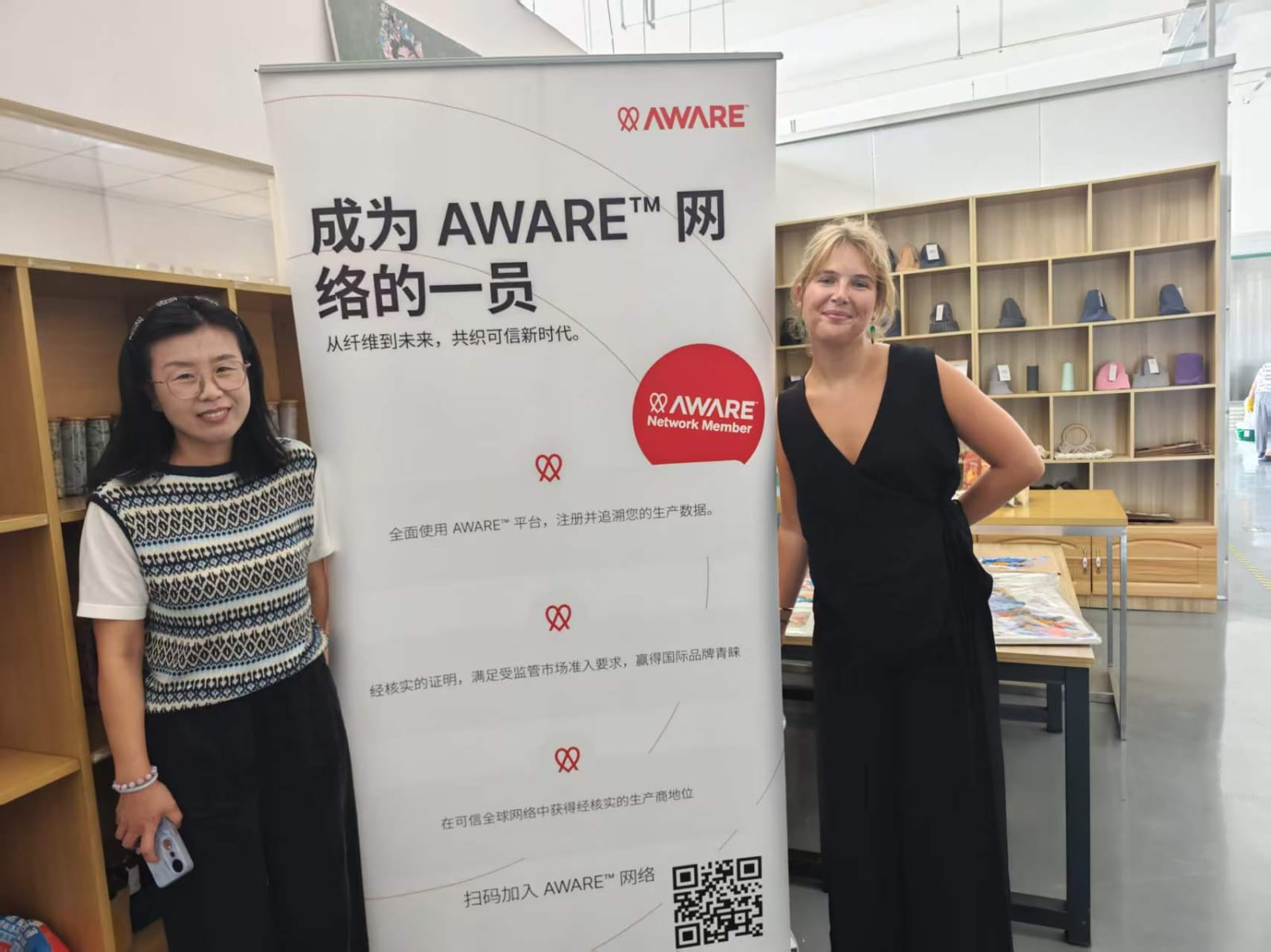
This is why AWARE™ has focused on producer-created data from the beginning. More than 200 facilities across China, India, Bangladesh, and Pakistan record production data at source and release it forward as material changes hands. Our data tokens travel with the material because they were created by the party that handled the material. Not inferred by someone later. Not approved after comparing PDFs. Recorded at the moment it mattered.
The choice is becoming very clear
Brands and producers do not need more traceability language. They need to know whether the data in their supply chain will hold when somebody asks difficult questions.
Can they show the origin? Can they show the handovers? Can they show the cross-border movement? Can they show the transformation steps? Can they show that the record existed before the question was asked?
If the answer is yes, they have a trail. If the answer is no, they have a reconstruction.
That difference used to be a technical detail. It is becoming a business risk. Shipments can be held. Market access can be challenged. Claims can be questioned. And once a brand is asked to prove the origin of a product, it is too late to build the trail that should have been travelling with the material from the start.
Cross-border traceability is not about adding more paperwork and audits to the textile industry. We have enough paperwork. It is about making sure the right data moves with the material, across every facility, every transaction, and every border.
The data must travel with the material - across borders. Otherwise, sooner or later, someone will have to reconstruct it. And that is exactly where the financial and reputational risk begins.
.png)





.jpeg)
.avif)